VivianAkerib, M.A.
Member of the Order of Psychologists of Québec (OPQ)
Traumatic Brain Injuries
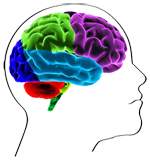
Traumatic Brain Injuries (TBI) occur for a variety of reasons, from sports-related injuries (e.g., concussions) to car accidents. The impact that the TBI can have on cognitive, emotional and behavioral functioning depends on the location and extent of the damage. Location helps determine what functions are going to be impacted. For example, damage to the left side of the brain may involve deficits in speech production and motor control of the right side of the body. The extent of the damage determines how severe the loss of functioning is, recovery time and whether the deficits that result are limited to a few domains of functioning or are more extensive. With more severe injuries, including those where loss of consciousness lasted for more than a very brief period of time, the cognitive deficits are likely to be more serious.

With mild brain injuries, such as concussion sustained during athletic competition, more subtle deficits will impact functioning. These subtle deficits are more difficult to pick up simply by talking to the person. The symptoms reported may include fatigue, irritability, headaches, personality change, and attention and memory problems. The goal of the neuropsychological evaluation when dealing with TBI is to elucidate the changes that have occurred in functioning, the services from the school and treatment team that may be necessary to improve daily functioning and to monitor progress and modify the services as needed.
For sports-related injuries, return to play is an important component of the evaluation. This often involves multiple administration of cognitive and emotional measures to determine if the athlete’s functioning has returned to baseline.Among the Various Domains Assessed
Academic achievement
As the term implies, academic achievement refers to those skills that are required to be a successful student. Three primary areas are evaluated within this domain: 1) reading (both decoding of word sounds and also comprehension of prose); 2) math both simple calculations and also reasoning in word problems and 3) writing.
Executive functions refer to a variety of processes that have the roll of guiding, directing, and managing cognitive, emotional and behavioral functioning (Gioia et al., 2000). The processes can be likened to the conductor of a train or foreman of a construction site whose job it is to direct and coordinate the activities of the other workers, assuring that they function in an integrated manner. Aspects of executive functions that are assessed during the evaluation process include problem-solving, planning and organization, working memory and cognitive flexibility. Within the role of learning and memory is working memory which refers to the ability to keep information in mind for a brief period of time during which that information is used in some manner. Once the information is manipulated, it is either transferred to long-termmemory or is lost because it is no longer needed.
Verbal and non-verbal memory
Memory refers to the process by which we encode, store and retrieve information. Encoding refers to the processing of the information to be stored. For instance, you may encode a list of spelling words by reviewing them multiple times. The rehearsal of the information leads to consolidation, or strengthening of its representation while it is stored. For the information that is stored in memory to be useful, we need to be able to retrieve it. The importance of memory to our functioning as human beings cannot be understated. Everything from remember a doctor’s appointment to responding to test questions requires some memory function. It is therefore not surprising that this is one of the primary foci during the evaluation process.
Memory functioning is assessed through a variety of techniques that allow the neuropsychologist to break the process down into its components. Thus, memory for verbal and visual information will be assessed as will the ability to recall information immediately after it is presented (e.g., working memory) and following a specified delay (long-term memory). Explicit memory, which involves the conscious recollection of information and implicit memory, which involves the ability to complete a task that has been previously learned (often referred to as “procedural memory”) are also assessed. This allows the neuropsychologist to discriminate where an individual who appears to be ‘forgetful’ is having difficulty.
Attention and concentration skills
One aspect of attention that is a frequent source of concern for adults and children who come for neuropsychological evaluations involves the ability to remain focused and on task. This is known as “sustained attention.” Other aspects of attention that are evaluated include divided attention (the ability to devote cognitive resources to more than one task at a time and completing each properly), the ability to initiate or inhibit actions, actively switching between tasks as necessary and the length of time and amount of energy that we have available to complete a task.
Personality
Refers to the amalgam of our underlying characteristics, including temperament, behavioral, emotional and cognitive factors that we use to guide us through our interactions with our environment. It determines how we deal with other people and the situations in our lives. In some instances, components of personality, whether through genetics or environmental influence, develop in such a way that they preclude us from functioning at a more effective level. This could be due to the presence of depression, ability to contend with stress or deal with interpersonal conflict. During the course of the evaluation, a number of techniques will be used to better understand how the persona being evaluated handles or mishandles situations in his or her environment so that appropriate recommendations can be made to improve functioning.
Important disclaimer!
All resources made available on our website are for your personal use only and copyrights apply. We are not responsible for the content of these documents or websites. We do not promote or advertise their services. None of the suggested documents or information can be used for self-diagnostic purposes.